
Panama Canal turned over to Panama
On December 31, 1999, the United States, in accordance with the Torrijos-Carter Treaties, officially hands over control of the Panama Canal, putting the strategic waterway into Panamanian hands for the first time. Crowds of Panamanians celebrated the transfer of the 50-mile canal, which links the Atlantic and Pacific oceans and officially opened when the SS Arcon sailed through on August 15, 1914. Since then, over one million ships have used the canal.
Interest in finding a shortcut from the Atlantic to the Pacific originated with explorers in Central America in the early 1500s. In 1523, Holy Roman Emperor Charles V commissioned a survey of the Isthmus of Panama and several plans for a canal were produced, but none ever implemented. U.S. interest in building a canal was sparked with the expansion of the American West and the California gold rush in 1848. (Today, a ship heading from New York to San Francisco can save about 7,800 miles by taking the Panama Canal rather than sailing around South America.)
In 1880 a French company run by the builder of the Suez Canal started digging a canal across the Isthmus of Panama (then a part of Colombia). More than 22,000 workers died from tropical diseases such as yellow fever during this early phase of construction and the company eventually went bankrupt, selling its project rights to the United States in 1902 for $40 million. President Theodore Roosevelt championed the canal, viewing it as important to America’s economic and military interests. In 1903, Panama declared its independence from Colombia in a U.S.-backed revolution and the U.S. and Panama signed the Hay-Bunau-Varilla Treaty, in which the U.S. agreed to pay Panama $10 million for a perpetual lease on land for the canal, plus $250,000 annually in rent.
Over 56,000 people worked on the canal between 1904 and 1913 and over 5,600 lost their lives. When finished, the canal, which cost the U.S. $375 million to build, was considered a great engineering marvel and represented America’s emergence as a world power.
In 1977, responding to nearly 20 years of Panamanian protest, U.S. President Jimmy Carter and Panama’s General Omar Torrijos signed two new treaties that replaced the original 1903 agreement and called for a transfer of canal control in 1999. The treaty, narrowly ratified by the U.S. Senate, gave America the ongoing right to defend the canal against any threats to its neutrality. In October 2006, Panamanian voters approved a $5.25 billion plan to double the canal’s size by 2015 to better accommodate modern ships.
Ships pay tolls to use the canal, based on each vessel’s size and cargo volume. In May 2006, the Maersk Dellys paid a record toll of $249,165. The smallest-ever toll—36 cents—was paid by Richard Halliburton, who swam the canal in 1928.

SPORTS
1988
Chicago Bears beat Philadelphia Eagles in freaky Fog Bowl
On December 31, 1988, the Chicago Bears defeat the Philadelphia Eagles, 20-12, in a playoff game plagued by a thick fog starting late in the first half. Playing conditions at Soldier Field in Chicago become problematic, and fans in attendance and television viewers struggle to see the game, dubbed the "Fog Bowl" by media.

GREAT BRITAIN
1600
Charter granted to the East India Company
Queen Elizabeth I of England grants a formal charter to the London merchants trading to the East Indies, hoping to break the Dutch monopoly of the spice trade in what is now Indonesia. In the first few decades of its existence, the East India Company made far less progress in the East Indies than it did in India itself, where it acquired unequaled trade privileges from India’s Mogul emperors. By the 1630s, the company abandoned its East Indies operations almost entirely to concentrate on its lucrative trade of Indian textiles and Chinese tea. In the early 18th century, the company increasingly became an agent of British imperialism as it intervened more and more in Indian and Chinese political affairs. The company had its own military, which defeated the rival French East India Company in 1752 and the Dutch in 1759.

SPACE EXPLORATION
1968
Soviets test supersonic airliner
The Soviet Union’s TU-144 supersonic airliner makes its first flight, several months ahead of the Anglo-French Concorde. The TU-144 so closely resembled the Concorde that the Western press dubbed it the “Konkordski.” In 1962, 15 years after U.S. pilot Chuck Yeager first broke the sound barrier, Britain and France signed a treaty to develop the world’s first supersonic passenger airline. The next year, President John F. Kennedy proposed a similar U.S. project. Meanwhile, in the USSR, Soviet leader Nikita Khrushchev ordered his top aviation engineers to beat the West to the achievement.
INVENTIONS & SCIENCE
1879
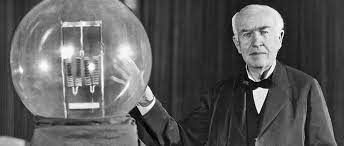
Thomas Edison demonstrates incandescent light
In the first public demonstration of his incandescent lightbulb, American inventor Thomas Alva Edison lights up a street in Menlo Park, New Jersey. The Pennsylvania Railroad Company ran special trains to Menlo Park on the day of the demonstration in response to public enthusiasm over the event.

WORLD WAR II
1944
Hungary declares war on Germany
The provisional government of Hungary officially declares war on Germany, bringing an end to Hungary’s cooperation—sometimes free, sometimes coerced—with the Axis power. Miklos Horthy, the anticommunist regent and virtual dictator of Hungary, who had once hoped to keep his country a nonbelligerent in the war, had reluctantly aligned Hungary with Hitler in November 1940. While ideologically not fascist, Hungary had many radical right-wing elements at play in its politics, as well as a history of anti-Semitism. Those radical forces saw many common “ideals” with Nazism and believed the future lay with Germany. So though Horthy little admired Hitler personally, he felt the need to placate influential parties within his own country and protect his nation from Soviet domination.

U.S. PRESIDENTS
1961
Kennedy and Khrushchev exchange holiday greetings
On December 31, 1961, President John F. Kennedy issued a statement extending his “sincere wishes” and those of the American people to Soviet Premier Nikita Khrushchev and the people of the Soviet Union for a peaceful and prosperous New Year. It was the height of the Cold War and the United States and Soviet Union were locked in a nuclear arms race.

ART, LITERATURE, AND FILM HISTORY
1985
Rick Nelson dies in a plane crash
Former teen idol Rick Nelson dies in plane crash in De Kalb, Texas, on December 31, 1985. When the teenage Ricky Nelson launched his pop career in 1957 by picking up a guitar and singing at the end of an episode of The Adventures of Ozzie And Harriet, he established a template for pop-music stardom that inspired hundreds of imitators in the decades that followed. But what Ricky Nelson had that so many other actors who failed as pop stars didn’t was undeniable musical talent. Having the full weight of the American Broadcasting Corporation behind him at the start of his career certainly guaranteed that the younger son of Ozzie and Harriet Nelson would sell a few records, but it didn’t guarantee that he wouldn’t stink. And Ricky Nelson didn’t stink—not by a long shot.

SPORTS
1972
Baseball star Roberto Clemente dies in plane crash
Roberto Clemente, future Hall of Fame baseball player, is killed along with four others when the cargo plane in which he is traveling crashes off the coast of Puerto Rico. Clemente was on his way to deliver relief supplies to Nicaragua following a devastating earthquake there a week earlier.

CRIME
1984
Subway shooter Bernhard Goetz turns himself in
Bernhard Goetz, the white man who shot four young Black men on a New York City subway train, turns himself in at a police station in Concord, New Hampshire. Goetz claimed that the men were trying to rob him and that he had acted in self-defense. At the time, New York was in the midst of a crime wave and Goetz was viewed by some people as a hero, an ordinary citizen fighting back against his supposed attackers.

AMERICAN REVOLUTION
1775
Patriots are defeated at Quebec
On December 31, 1775, Patriot forces under Colonel Benedict Arnold and General Richard Montgomery attempt to capture the city of Quebec under cover of darkness and snowfall. They fail, and the effort costs Montgomery his life.


Comments
Post a Comment